
TL;DR
Commercial parking lots in Greensboro need monthly inspections, quarterly surface cleaning, and annual crack filling, plus sealcoating and line striping every 2-3 years, pothole repairs every 3-5 years, and full resurfacing every 10-15 years. Staying on this schedule catches damage while it's cheap to fix and can add 8-15 years of life to a lot before a full replacement is ever needed.
Table of Contents
- Monthly: Regular Inspections
- Quarterly: Surface Cleaning
- Annually: Crack Filling
- Every 2-3 Years: Sealcoating
- Every 2-3 Years: Line Striping
- Every 3-5 Years: Pothole Repairs
- Every 10-15 Years: Resurfacing
- Every 15-25 Years: Full Replacement
- Summary of Maintenance Schedule
- Frequently Asked Questions
- Request a Quote
As a business owner in Greensboro, maintaining your commercial parking lot is essential for keeping your property safe, attractive, and functional. A well-maintained parking lot not only ensures the safety of customers and employees but also enhances your business's curb appeal, making a positive first impression on visitors. Regular maintenance can help you avoid costly repairs, extend the life of your asphalt, and ensure compliance with safety regulations.
In this guide, we'll walk you through how often you should perform different maintenance tasks to keep your parking lot in top condition. From routine inspections to sealcoating and line striping, following these timelines will help protect your investment and keep your parking lot looking its best.
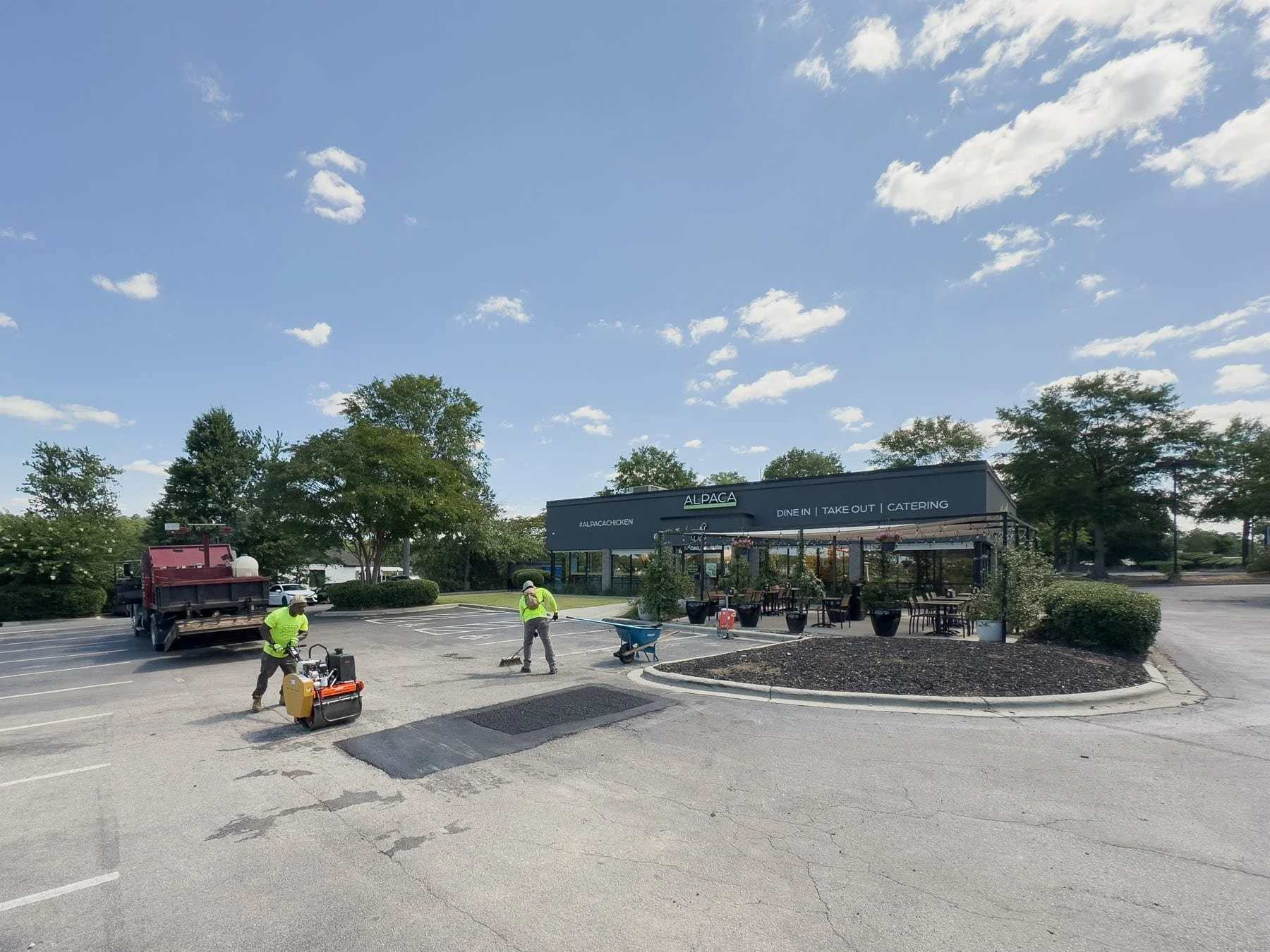
Monthly: Regular Inspections
Task: Inspect for cracks, potholes, oil stains, and surface wear.
Frequency: Monthly
Performing monthly inspections is a simple but effective way to catch small issues before they become bigger, more expensive problems. During your inspection, check for:
Cracks: Small cracks can allow water to seep into the foundation, leading to more serious damage over time.
Potholes: Early detection of potholes allows for quicker repairs, preventing them from growing larger.
Oil Stains: Oil or chemical spills can weaken the asphalt and should be cleaned promptly.
Fading or worn-out line markings: Ensure that parking lines and safety markings are clearly visible.
By addressing these issues quickly, you can avoid the need for more extensive repairs later on.
Quarterly: Surface Cleaning
Task: Clean the surface to remove debris, dirt, and chemical spills.
Frequency: Quarterly
A clean parking lot not only looks more professional but also helps protect the asphalt from damage. Every three months, take the time to:
Sweep or blow away debris like leaves, dirt, and trash.
Power wash oil and chemical stains to prevent them from penetrating the surface and weakening the asphalt.
Check and clean drains and gutters to prevent water from pooling on the asphalt surface, which can lead to cracks and potholes.
Keeping your parking lot clean and free of debris will help extend its lifespan and maintain a professional appearance.
Annually: Crack Filling
Task: Fill any cracks that have developed in the asphalt.
Frequency: Annually
Crack filling is one of the most important maintenance tasks for preserving the integrity of your parking lot. Cracks are common, especially in areas with fluctuating temperatures like Greensboro, where the freeze-thaw cycle can cause asphalt to expand and contract. These cracks can allow water to seep into the base of the asphalt, causing erosion and leading to potholes.
Cracks less than 1/4 inch wide can typically be filled with a rubberized crack filler to seal them and prevent further damage.
Larger cracks may require hot-applied crack sealing, which expands and contracts with temperature changes for a longer-lasting solution.
By filling cracks every year, you can prevent them from worsening and save yourself from more expensive repairs down the line. Read more about the process here.
Every 2-3 Years: Sealcoating
Task: Apply a fresh layer of sealcoat to protect the surface.
Frequency: Every 2-3 years
Sealcoating is one of the best ways to protect your parking lot from the elements and extend its life. It adds a protective layer that shields the asphalt from UV rays, water, oil spills, and other chemicals. In addition to its protective benefits, sealcoating restores the black color of the asphalt, improving the overall appearance of your parking lot.
Why it's important: Sealcoating helps prevent cracks and potholes from forming, reduces the impact of weather on the asphalt, and protects against wear from traffic.
How to apply: For best results, hire a professional asphalt contractor to ensure even application and proper curing.
After sealcoating, it's important to keep traffic off the surface for at least 24-48 hours to allow the sealcoat to cure properly. Read more about the process here.
Every 2-3 Years: Line Striping
Task: Repaint parking lines, crosswalks, and safety markings.
Frequency: Every 2-3 years (or as needed)
Faded or worn-out parking lot lines can cause confusion and safety concerns for drivers and pedestrians. Clear, well-marked lines are essential for organizing traffic flow, designating parking spaces, and ensuring compliance with the Americans with Disabilities Act (ADA).
Repaint lines, arrows, and crosswalks to ensure they are highly visible and easy to follow.
Check ADA compliance: Ensure accessible parking spaces are properly marked with bright paint and signage.
Keeping your parking lot well-striped not only improves safety but also enhances the overall appearance of your business property. Read more about the process here.
Every 3-5 Years: Pothole Repairs
Task: Repair potholes before they worsen.
Frequency: Every 3-5 years (or as needed)
Potholes are one of the most visible signs of parking lot deterioration, and if left unaddressed, they can grow larger and more expensive to repair. Water infiltration, heavy traffic, and fluctuating temperatures all contribute to pothole formation.
Cold patching can be used for small potholes and is a temporary fix that may last a few months.
Infrared asphalt patching is a more permanent solution, blending new and old asphalt for a seamless repair that lasts for years.
Full-depth patching may be necessary for severe potholes, where the base of the asphalt has been compromised.
For larger parking lots with heavy traffic, pothole repair should be done more frequently, especially after winter when the freeze-thaw cycle can cause significant damage. Read more about the process here.
Every 10-15 Years: Resurfacing
Task: Resurface the parking lot if the surface has widespread damage.
Frequency: Every 10-15 years (or as needed)
If your parking lot is showing signs of widespread cracking, potholes, or surface wear, but the foundation is still strong, resurfacing may be a good option. Resurfacing involves applying a new layer of asphalt over the existing surface, restoring its appearance and extending the life of your parking lot by several years.
Why it's important: Resurfacing is more cost-effective than a full replacement and can add 8-15 years of life to your parking lot.
How to do it: Hire a professional asphalt contractor to assess whether your lot is a good candidate for resurfacing.
Resurfacing is ideal when the surface damage is too extensive for minor repairs, but the underlying structure is still intact.
Every 15-25 Years: Full Replacement
Task: Replace your parking lot when it reaches the end of its lifespan.
Frequency: Every 15-25 years
Even with regular maintenance, all parking lots will eventually need to be replaced. If your parking lot has widespread cracks, multiple large potholes, and signs of foundational issues, it's time to consider a full replacement.
When to replace: If the asphalt is crumbling, the base is unstable, or repairs are no longer effective, it's best to replace the lot entirely.
Benefits: A full replacement provides a clean, smooth surface and ensures your lot will last for many more years with proper care.
Summary of Maintenance Schedule
Monthly: Inspections for cracks, potholes, and stains.
Quarterly: Surface cleaning.
Annually: Crack filling.
Every 2-3 years: Sealcoating and line striping.
Every 3-5 years: Pothole repairs.
Every 10-15 years: Resurfacing (if needed).
Every 15-25 years: Full replacement (if needed).
Staying ahead of this schedule is the easiest way to protect your investment. Get a quote and we'll take a look.
Frequently Asked Questions
How often should a Greensboro parking lot be inspected for damage?
Monthly. A quick walk-through to check for cracks, potholes, oil stains, and faded lines catches small problems while they're still a five-minute fix instead of a major repair.
What's the difference between sealcoating and full resurfacing?
Sealcoating is a protective surface layer applied every 2-3 years to block UV rays, water, and oil; resurfacing lays down an entirely new layer of asphalt every 10-15 years once the surface has widespread damage but the base underneath is still solid.
How many years can resurfacing add to a parking lot's life?
A properly timed resurfacing job can add 8-15 years of life to a parking lot, which is why it's almost always more cost-effective than a full replacement.
Does Green Street Blacktop repair parking lots in Greensboro?
Yes — we serve Durham, Raleigh, Chapel Hill, Cary, Greensboro, Winston-Salem, and High Point, focusing on repair and maintenance rather than new installations.
Contact us today for a free consultation or to schedule your next parking lot maintenance service. Let's work together to protect your investment and ensure your parking lot is safe, functional, and attractive for years to come!