
Pothole Repair
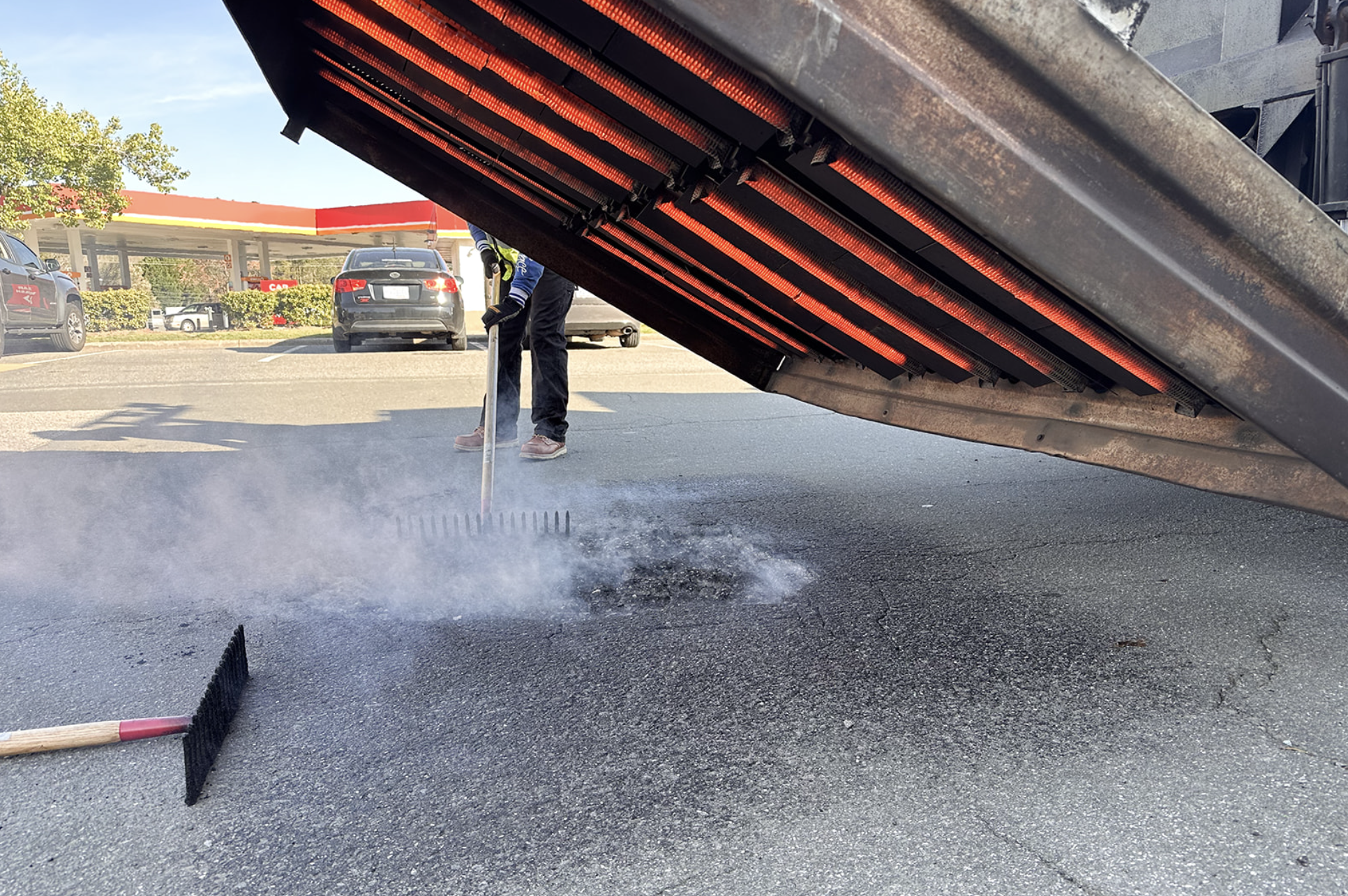
Potholes form when water seeps into cracks in the pavement, freezes, and expands, breaking the surface open from the inside. Left alone, that turns into vehicle damage, trip hazards, and a liability problem for whoever owns the lot. We fix most potholes with infrared repair, a process that heats the existing asphalt in place so it can be raked, rejuvenated, and compacted into a seamless patch. It's fast, cost-effective, and doesn't waste material that's still usable. For larger or more deteriorated areas, we use a full-depth saw cut and replace method instead, for a repair built to hold long-term.
Signs it’s time for Pothole Repair:
What was once a crack or soft spot in your asphalt has developed into an open pothole
The same spot has been patched before and failed again
Water is collecting in a low point instead of draining off
Tenants, residents, or visitors have started complaining or reporting vehicle damage
How it Works, Step by Step:
Assess the damage. We check depth, surrounding pavement condition, and whether the base underneath is still sound.
Choose the method. Infrared repair is best for most potholes on a structurally sound base. Saw-cut is for larger or more deteriorated areas.
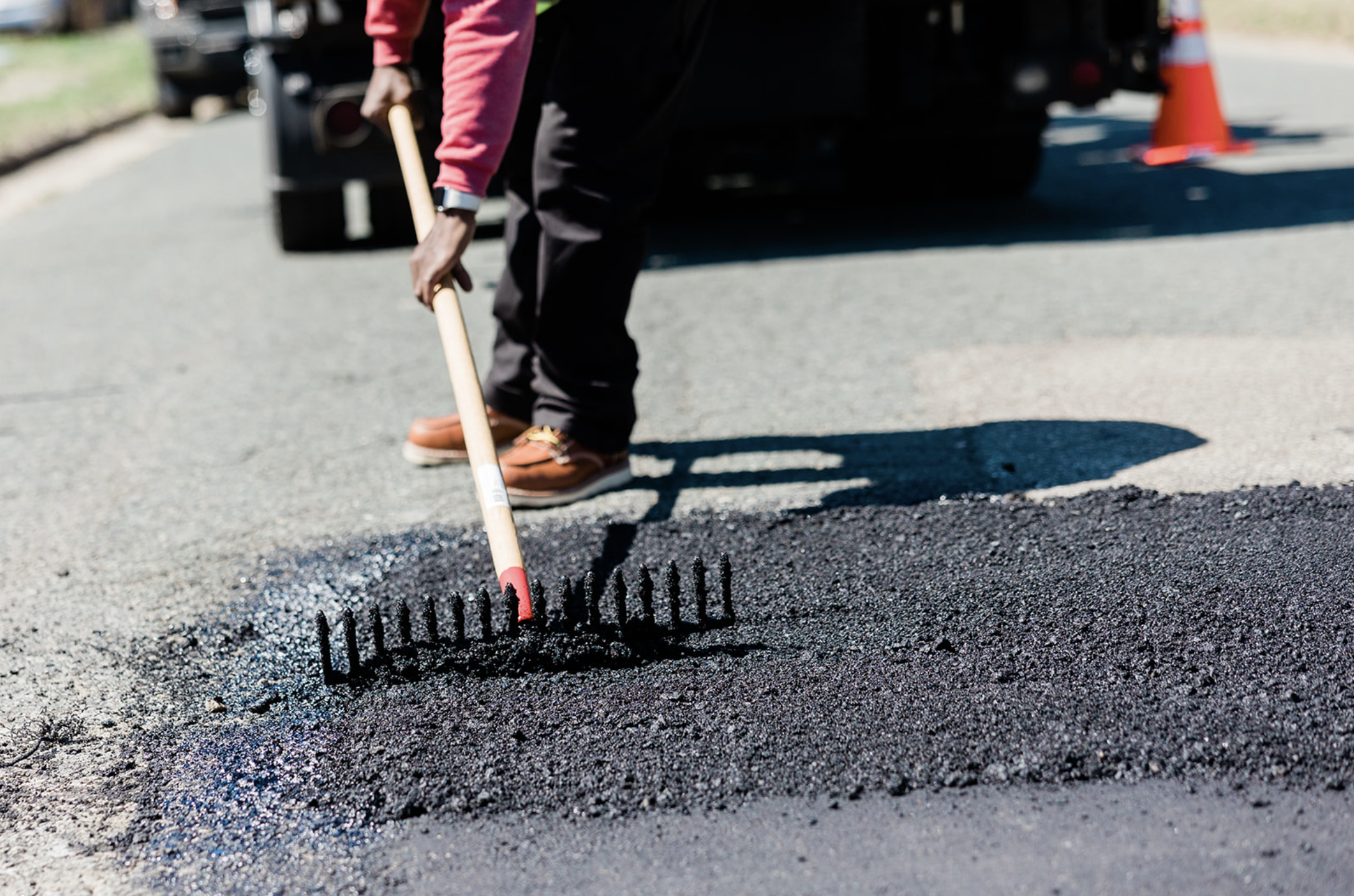
Infrared repair: the existing asphalt is heated, raked, leveled, and compacted into a seamless, permanent patch.
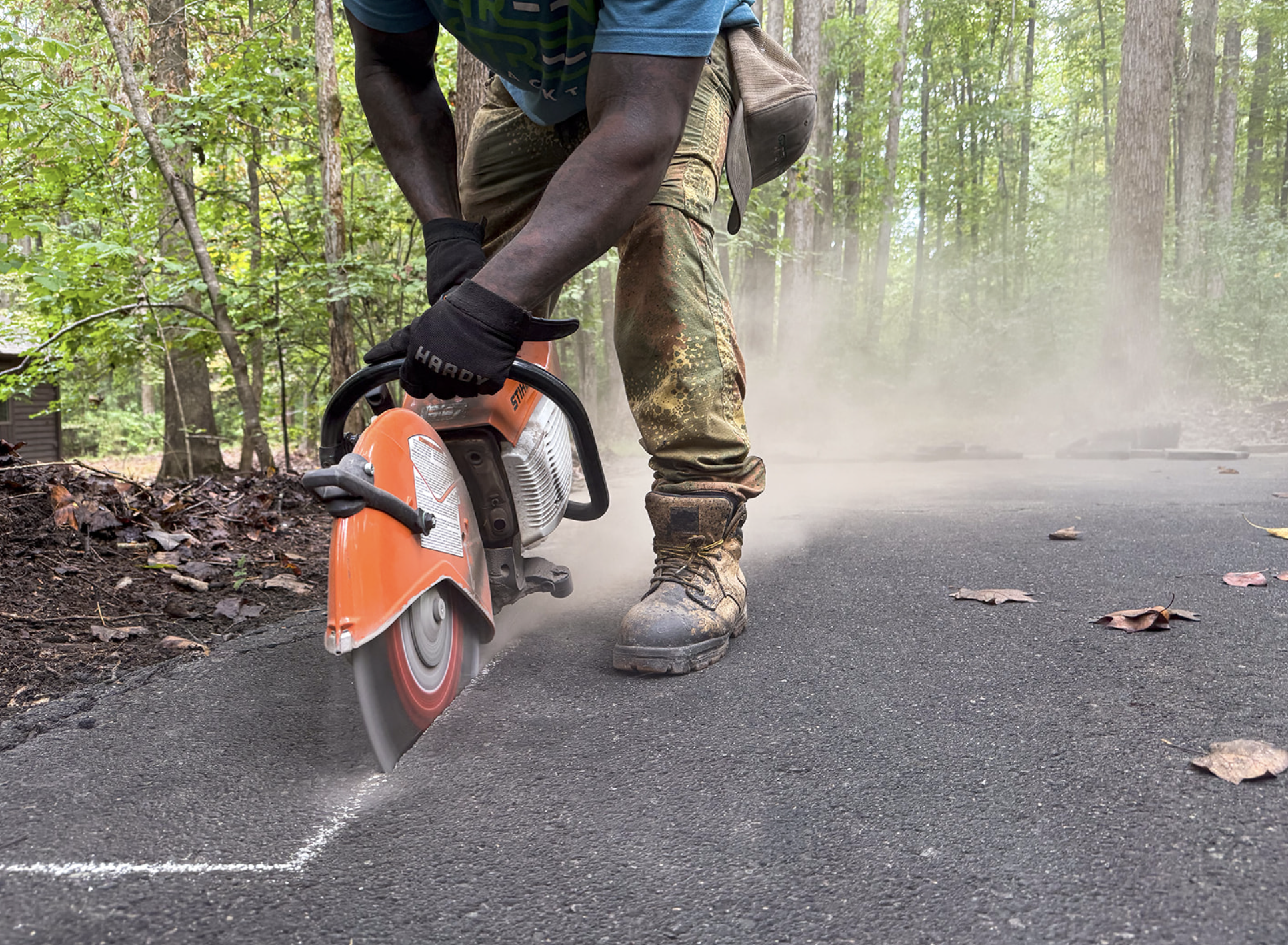
Saw-cut repair: the damaged section is cut out cleanly, excavated, and replaced with new asphalt, compacted to match the surrounding grade.
Finish and clean up. The repair is compacted, leveled, and the site is cleared.
Considerations
Infrared repair works best in moderate weather and on a base that's still structurally sound. Severe base failure or a spot that's been patched repeatedly before usually calls for the more permanent saw-cut and replace approach instead.
How pricing is determined
Pricing is based on square footage, depth of damage, and repair type. Saw-cut repairs are priced separately from infrared work, since they require more new asphalt and involve excavation and material disposal that infrared repair doesn't.
Frequently Asked Questions
-
Infrared repair heats and reuses the existing asphalt in place, which works well when the base underneath is still sound. Saw-cut repair removes the damaged section entirely and replaces it with new material, which we use when the damage or the base underneath is too far gone for infrared to fix properly.
-
Not if it's fixed the right way the first time. Potholes that keep coming back in the same spot are usually a sign the earlier repair didn't address what was happening underneath, which is exactly why we assess the base before choosing a method rather than defaulting to the fastest option.
-
It's a stopgap, not a repair. Cold patch isn't compacted or bonded the way a proper repair is, so it tends to fail again within a season, sometimes within weeks under regular traffic.
-
You typically don’t! Infrared repair compacts and sets fast enough that the area is usually ready for traffic shortly after we finish, so there's no extended closure. For larger saw-cut repairs, we'll let you know up front if a brief closure is recommended.
Related Services
Utility Cut Repair
A poorly patched utility cut is one of the most common ways a pothole gets started in the first place.
Milling & Patching
When the damage goes deeper than a spot repair can fix, milling and patching is the next step up.
Sealcoating & Crack Fill
Once the pothole's fixed, sealcoating and crack fill are what keep the next one from forming.
We’d love to repair that pothole for you!
Drop us a line - we’re here to help (and we’ll actually call you back)!