
Best DIY Tools for Asphalt Repair
TL;DR
Small asphalt repairs — filling cracks, patching potholes, and resealing a driveway — are doable with about a dozen affordable tools: crack filler, a caulk gun, a wire brush, cold patch asphalt, a hand tamper, and driveway sealer cover most jobs, backed up by basic safety gear. Widespread cracking, multiple potholes, or damage that keeps coming back is the signal to call a professional instead of reaching for another DIY kit.
Asphalt driveways and parking lots take a beating from Durham's weather — hot, humid summers, occasional freezing snaps, and heavy seasonal rain. Over time, cracks, potholes, and other damage start to appear, but many of these issues can be fixed with a little DIY know-how.
If you're a homeowner or property manager looking to tackle asphalt repairs yourself, having the right tools on hand makes the job easier and more effective. Here's a rundown of the essential tools and materials you'll need to repair asphalt like a pro, keeping your driveway or parking lot in good shape for years to come.
Why DIY Asphalt Repair?
Asphalt repairs don't always require calling in a professional. For smaller jobs — filling in cracks, patching potholes, or applying sealcoat — homeowners and property managers can often handle it themselves. DIY asphalt repair can save money, extend the life of a driveway, and give a real sense of accomplishment. With the right tools, small issues can be fixed before they turn into bigger, more expensive problems.
The Tools You Need for DIY Asphalt Repairs
Doing asphalt work well takes more than elbow grease. Here's what you'll need to get it done right.
1. Asphalt Crack Filler
One of the most common issues with asphalt driveways is cracking. Cracks develop from the natural expansion and contraction of asphalt as temperatures change, or from heavy traffic. Left untreated, water seeps into these cracks and leads to potholes or more serious damage.
For small cracks, an asphalt crack filler is a must-have. Crack fillers come as liquid or solid materials applied directly into the crack:
Cold pour crack filler: best for smaller cracks, often sold in a squeeze bottle or jug for easy application.
Hot pour crack filler: better for larger cracks or a more durable fix. It requires heating before application, which is more labor-intensive but longer-lasting.
For Durham's hot summers and occasional freezing snaps, choose a filler rated for extreme temperature swings.
2. Caulk Gun
To apply cold pour crack filler more precisely, keep a caulk gun on hand. It lets you control the flow of the filler so you can fill cracks evenly and without mess — simple, affordable, and a must-have for any DIY asphalt repair project.
Durham tip: with the freeze-thaw swings common here, filling cracks promptly with a caulking gun helps keep them from worsening.
3. Wire Brush or Stiff-Bristled Broom
Before applying any filler, the crack or pothole needs to be clean. Dirt, debris, and loose asphalt keep crack fillers and patch materials from adhering properly, which is why a wire brush or a stiff-bristled broom is essential prep work.
Use the wire brush to scrape loose debris out of smaller cracks; for larger areas or potholes, sweep the area thoroughly with the broom first.
Durham tip: clean the driveway after a storm — rainwater tends to push debris into cracks, which makes repairs less effective.
4. Leaf Blower or Shop Vacuum
To clear dirt and debris the broom might miss, a leaf blower or shop vacuum is a big help — especially for getting a repair area fully clean before applying filler or patch. A shop vacuum is particularly useful for sucking loose material out of cracks or potholes.
5. Cold Patch Asphalt
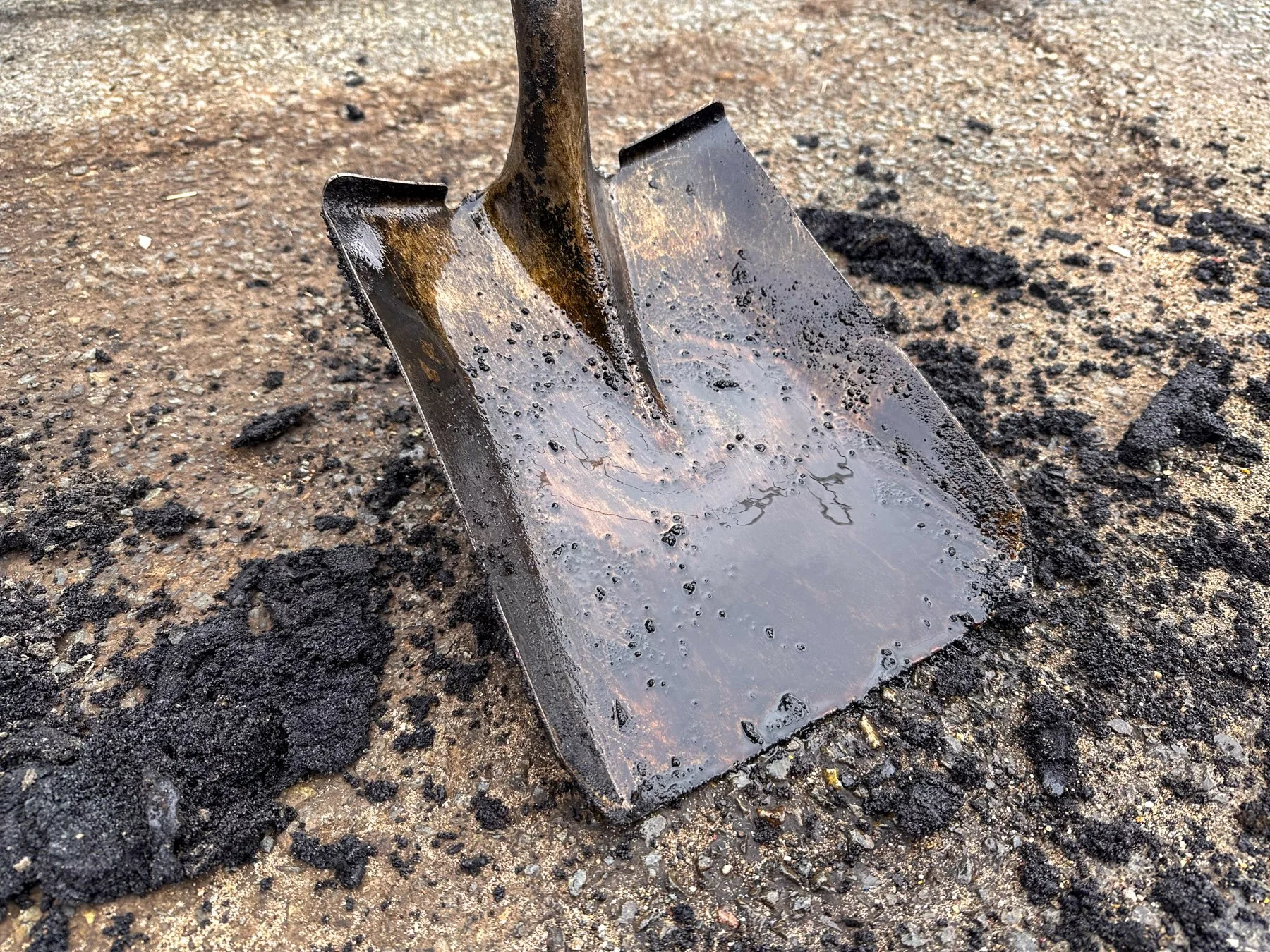
For repairing small potholes, cold patch asphalt is the standard DIY option. It's premixed asphalt that goes straight into a pothole with no heating required, and it's available at most hardware stores.
Cold patch works best for smaller potholes.
Hot patch asphalt needs professional equipment and is typically used for larger jobs, with a longer-lasting result.
For Durham's mix of hot summers and mild winters, cold patch can handle the occasional freeze-thaw cycle that causes potholes in the first place.
6. Tamper or Compactor
Once cold patch is in the pothole, it needs to be compacted so it's as solid as the surrounding asphalt. A tamper or compactor does that job. Manual tampers are affordable and simple — they let you press the cold patch down tightly to form a solid surface.
For a larger repair, a rented mechanical compactor gets more efficient results, but a hand tamper is plenty for most small jobs.
7. Trowel or Putty Knife
When applying cold patch asphalt or crack filler, a trowel or putty knife helps smooth the material and spread it evenly — important for both the look and the durability of the repair. Use it to work the material into every corner of the pothole or crack.
8. Driveway Sealer
Once repairs are done, a fresh coat of driveway sealer protects the work and extends the driveway's life. Sealers create a protective layer against UV rays, water, oil, and other chemicals that cause damage over time.
Sealcoating every 2-3 years helps prevent cracks and potholes from forming in the first place — especially useful in Durham, where summer sun can accelerate surface damage.
9. Squeegee or Brush for Sealcoating
When it's time to apply sealer, a squeegee or sealcoating brush spreads it evenly across the surface for a smooth finish. A wide squeegee saves time on larger areas; a brush is easier to maneuver on smaller driveways or detailed spots.
10. Safety Gear
Safety comes first with any home improvement project. Keep gloves, goggles, and protective clothing on hand — asphalt products can be messy and hard to clean off skin or clothing.
If using hot pour crack filler or renting heavy equipment, add a face mask or respirator to protect against fumes or dust.
11. Pressure Washer (Optional, but Recommended)
A pressure washer helps prep a dirty, grimy, or oil-stained driveway before repairs — a clean surface is essential for crack filler or cold patch to adhere properly. It's also useful for cleaning up once the repair is finished.
Why Hire a Professional?
DIY asphalt repair can be a rewarding project for small jobs, but some repairs are better left to the pros. If a driveway has extensive damage, large cracks, or multiple potholes, hiring a professional ensures the job gets done right.
At Green Street Blacktop, we specialize in asphalt repair, infrared asphalt patching, sealcoating, crack filling, and line striping across Durham and the Triangle. We use environmentally friendly processes and products, and as a women-owned business, we're committed to excellent customer service every step of the way.
Frequently Asked Questions
What tools do I need for a basic DIY crack repair?
Cold pour crack filler, a caulk gun to apply it evenly, and a wire brush or stiff broom to clean the crack first — most hardware-store kits cover all three for under $50.
Is cold patch asphalt a permanent pothole repair?
No — cold patch is a temporary fix that often needs to be reapplied within a season or two. A lasting repair uses hot mix or infrared patching, which bonds directly with the surrounding asphalt.
How often should I reseal my driveway after DIY repairs?
Every 2-3 years. Sealcoating on that schedule protects against UV rays, water, and oil before new cracks have a chance to form.
What safety gear is essential for DIY asphalt work?
Gloves, safety goggles, and protective clothing at minimum. Add a respirator or face mask if you're using hot pour crack filler or renting equipment that produces fumes or dust.
When should I stop DIYing and call a professional?
Once damage covers a large section of the driveway, you're dealing with multiple potholes, or cracks keep reopening after a DIY fix — those usually point to a deeper base problem that patching alone won't solve.
If you're unsure whether your driveway needs a DIY fix or a professional touch, we're here to help. Whether you need advice on materials or want to schedule an asphalt repair service, reach out for a free quote — our team is always happy to offer guidance and make sure your asphalt is in good shape.